Yueqing City, Wenzhou City, Zhejiang Province, China +86-15355913677 sales1@cksoftstarter.com
Follow Us -
News

Which High Performance Three Phase VFD Delivers Reliable Motor Control for Industrial Applications?

2026-11-17 0 Leave me a message

Industrial production equipment requires reliable motor control, stable operation, and efficient energy management. A High Performance Three Phase VFD (Variable Frequency Drive) helps achieve these goals by adjusting the frequency and voltage supplied to an AC motor, allowing equipment speed and torque to be controlled according to actual operating requirements.

However, selecting a suitable VFD involves more than matching the motor's rated power. Input voltage, output current, control mode, starting torque, overload capacity, operating environment, and communication requirements all influence the final decision. This guide explains how three-phase VFDs work, their major advantages, industrial applications, technical specifications, and selection considerations. It also explores how Zhejiang Chuanken Electric Co., Ltd. supports industrial motor control requirements with its high-performance frequency converter solutions.

High Performance Three Phase VFD (Variable Frequency Drive)


1. What Is a High Performance Three Phase VFD?

A High Performance Three Phase VFD is an electronic motor control device that regulates the speed and torque of a three-phase AC motor by adjusting its power supply frequency and voltage. It is also commonly called a variable frequency drive, frequency inverter, or AC drive.

Unlike conventional motor control methods that operate a motor at a relatively fixed supply frequency, a VFD allows the motor to run at different speeds according to the requirements of the connected equipment. This flexibility is valuable in industrial environments where production loads, material flow, pressure, and operating conditions frequently change.

A high-performance model generally offers more advanced motor control capabilities than a basic frequency converter. These may include sensorless vector control, accurate speed regulation, high starting torque, adjustable acceleration and deceleration, PID control, multiple operating speeds, and comprehensive fault protection.

For example, the SCK300 series from Zhejiang Chuanken Electric Co., Ltd. is designed for industrial applications requiring flexible motor control. Its documented control options include V/F control, no-PG vector control, and torque control, supporting a variety of motor-driven machines.

Key concept: A high-performance VFD does more than change motor speed. It helps coordinate motor torque, acceleration, deceleration, and operating conditions with the actual requirements of industrial equipment.

Why Are Three Phase VFDs Widely Used?

Three-phase motors are common in factories because they can deliver substantial mechanical power and operate a wide range of industrial equipment. A compatible three-phase VFD provides flexible control over these motors, helping manufacturers improve process consistency and reduce unnecessary mechanical stress.

2. How Does a Three Phase VFD Work?

A three-phase VFD controls an AC motor through a power conversion process. Although internal designs vary, a conventional voltage-source VFD generally contains three main stages: a rectifier, a DC bus, and an inverter.

Stage 1: AC Input and Rectification

The VFD receives incoming AC electrical power from the supply system. The rectifier converts this alternating current into direct current. The rectifier arrangement depends on the drive design and power rating.

Stage 2: DC Bus Processing

The DC bus uses capacitors and other components to smooth and stabilize the rectified voltage. This intermediate DC section provides the energy needed by the inverter stage.

Stage 3: Inverter and Variable Frequency Output

The inverter uses electronic switching devices to generate a controlled three-phase output. By adjusting the switching pattern and output frequency, the drive controls the electrical conditions supplied to the motor.

Rectifier

Converts incoming AC power into DC power.

DC Bus

Filters and stabilizes the intermediate DC voltage.

Inverter

Produces variable-frequency three-phase output.

Control System

Regulates motor operation according to commands and feedback.

How Frequency Affects Motor Speed

For an AC motor, synchronous speed is determined by the supply frequency and the number of motor poles:

Ns = 120 × f / P

Where:

  • Ns: Synchronous speed in revolutions per minute (RPM).
  • f: Supply frequency in hertz (Hz).
  • P: Number of motor poles.

For example, the synchronous speed of a four-pole motor is 1,500 RPM at 50Hz and 1,800 RPM at 60Hz. When the VFD changes the output frequency, the motor's operating speed changes accordingly. The actual motor speed is slightly lower than synchronous speed in an induction motor because of slip.

This relationship allows industrial operators to control pumps, fans, conveyors, and other equipment more precisely than with fixed-frequency operation.

3. Key Features of a High Performance Three Phase VFD

High-performance frequency converters are designed to address demanding industrial operating conditions. Their most valuable features are those that improve motor response, operational stability, and equipment protection.

3.1 Advanced Vector Control

Vector control provides more precise regulation of motor torque and speed than basic scalar control in many demanding applications. Sensorless vector control can estimate motor operating conditions without requiring a physical speed encoder.

This capability is useful when equipment requires strong low-speed torque, more accurate speed regulation, or improved dynamic response.

3.2 High Starting Torque

Some industrial machines require considerable torque when starting or accelerating. Crushers, conveyors, and material-handling equipment may experience significant resistance before reaching normal operating speed.

A suitable high-performance VFD can provide controlled starting torque according to its rated operating conditions, helping reduce the risk of motor stalling during startup.

3.3 Adjustable Acceleration and Deceleration

Adjustable acceleration and deceleration times allow equipment to start and stop more smoothly. This can reduce mechanical shock, belt tension changes, pipeline pressure fluctuations, and unnecessary stress on connected machinery.

3.4 Multiple Speed Settings

Multi-speed functions allow operators to configure different operating frequencies for specific production stages. This is particularly useful for machinery that needs several predefined speeds rather than continuous manual adjustment.

3.5 Built-in PID Control

PID control can automatically adjust motor speed based on feedback from a pressure sensor, flow sensor, or another process instrument. For example, a pump drive can adjust its output frequency to maintain a target water pressure as demand changes.

3.6 Comprehensive Protection Functions

Industrial drives may include protection against overcurrent, overvoltage, undervoltage, overheating, overload, phase loss, and other abnormal conditions. Protection functions help identify operating problems and reduce the likelihood of damage to the drive and connected motor.

4. Understanding Important Technical Specifications

Before purchasing a high-performance three-phase VFD, buyers should review its electrical ratings and control capabilities. The following specifications are particularly important for industrial applications.

Specification Meaning Selection Consideration
Input Voltage Voltage supplied to the drive. Must match the available electrical supply.
Input Frequency Frequency of the incoming power supply. Confirm compatibility with 50Hz or 60Hz systems.
Output Voltage Voltage delivered to the motor. Must match the motor's rated voltage and connection.
Output Frequency Adjustable frequency supplied to the motor. Consider the motor's permitted speed range.
Rated Output Current Continuous current capability of the drive under specified conditions. Must meet the motor's actual current requirements.
Overload Capacity Ability to supply current above the rated value for a specified duration. Check the load duty and acceleration requirements.
Control Mode Method used to regulate motor operation. Select V/F, vector, or torque control according to the application.
Communication Interface for communication with automation equipment. Check supported protocols and expansion options.
Protection Functions Functions that respond to electrical and thermal abnormalities. Review the protection coverage and fault handling requirements.

Input Voltage and Output Compatibility

Three-phase VFDs are available for different voltage classes, including 220V, 380V, 480V, and 660V systems. Some product configurations also support specific single-phase input and three-phase output combinations.

The SCK300 product range offers configurable voltage options. Its published product information lists 220V, 380V, and 660V input voltage classes with a stated ±15% range. The exact voltage configuration must be confirmed for the selected model.

Output Frequency

Output frequency determines the motor's operating speed range. The SCK300 product information specifies an output frequency range of 0–400Hz. However, operating a motor above its rated frequency requires careful evaluation of mechanical speed limits, cooling, insulation, and load characteristics.

Overload Capacity

Overload capacity indicates how much current a VFD can supply above its rated current for a defined period. For the documented SCK300 configuration, the published overload capability is 150% of rated current for 60 seconds and 180% for 10 seconds.

These values are product-specific and should be verified against the selected model and applicable operating conditions.

5. Common Industrial Applications of High Performance Three Phase VFDs

Three-phase VFDs are used in many industries because they provide flexible speed and torque control for different types of motor-driven equipment.

5.1 Water Pumps and Irrigation Systems

Pumps are among the most common VFD applications. In water supply systems, a VFD can adjust pump speed according to actual demand, helping maintain stable pipeline pressure.

When connected to a suitable pressure sensor, a drive with PID control can automatically increase or decrease motor speed. This helps reduce unnecessary pumping and can minimize pressure fluctuations during startup and operation.

5.2 Industrial Fans and Blowers

Ventilation and air handling systems often experience changing airflow requirements. A VFD allows fan speed to follow actual demand instead of operating continuously at full speed.

For suitable centrifugal fan and pump applications, reducing rotational speed can significantly reduce power consumption. The actual savings depend on the system curve, operating range, motor efficiency, and control strategy.

5.3 Conveyor Belt Systems

Conveyor systems require controlled acceleration, stable running speeds, and coordinated material movement. A VFD can adjust belt speed to match upstream and downstream production equipment.

For demanding conveyor applications, the drive's starting torque, overload capacity, braking requirements, and communication functions should be carefully evaluated.

5.4 Crushers and Mining Equipment

Crushers may operate under heavy and changing mechanical loads. A suitable high-performance VFD can provide controlled acceleration, adjustable operating speed, and improved coordination with other processing equipment.

Depending on the machine design, speed adjustment can help operators manage material throughput and reduce unnecessary mechanical impact. High-inertia loads and sudden load changes require particular attention during drive selection.

5.5 Compressors and Industrial Machinery

Air compressors and production machinery often require precise motor speed control. A properly selected VFD can adjust motor output to match changing process requirements, potentially reducing energy consumption during partial-load operation.

5.6 Cranes and Material Handling

Cranes and lifting systems may require accurate speed and torque control during starting, acceleration, deceleration, and positioning. Advanced vector control and suitable braking arrangements can support these requirements.

For crane applications, drive selection must also consider mechanical brakes, regenerative energy, load handling, safety circuits, and the relevant lifting equipment standards.

Industry Typical Equipment Main VFD Requirement
Water Treatment Water pumps and booster systems Pressure regulation and stable flow.
Mining Crushers and conveyors High starting torque and overload capability.
Manufacturing Production machinery and processing lines Precise speed control and automation integration.
Building Services Fans and ventilation equipment Adjustable airflow and energy management.
Material Handling Cranes and lifting machinery Torque control and controlled acceleration.
Industrial Processing Compressors and mixers Flexible operating speed and process control.

6. How to Select the Right High Performance Three Phase VFD

Choosing a VFD based only on the motor's kilowatt rating can lead to incorrect equipment selection. A more reliable approach considers the complete electrical and mechanical requirements of the application.

Step 1: Check the Motor Nameplate

Collect the motor's rated power, voltage, current, frequency, speed, power factor, and connection information. The rated current is particularly important because the VFD must be capable of supplying the required motor current under the intended operating conditions.

Step 2: Identify the Load Type

Different machines have different torque and speed requirements. Fans and centrifugal pumps generally have variable-torque characteristics, while conveyors, crushers, and lifting equipment may require more substantial starting torque.

Identify whether the application is light duty, normal duty, or heavy duty according to the drive manufacturer's rating definitions.

Step 3: Confirm the Power Supply

Check the available input voltage, number of phases, and supply frequency. Ensure that the selected VFD has the correct input configuration and output voltage for the motor.

Step 4: Evaluate Rated Output Current

Compare the VFD's rated output current with the motor's nameplate current. Do not rely on motor power alone, especially when the application involves high ambient temperatures, altitude, frequent overloads, or demanding duty cycles.

Step 5: Select the Control Method

Basic fan and pump applications may operate satisfactorily with V/F control. Applications requiring stronger low-speed torque and improved dynamic performance may benefit from sensorless vector control or another suitable advanced control mode.

Step 6: Consider Acceleration and Braking

High-inertia equipment may require longer deceleration times, a braking resistor, or a regenerative braking solution. The correct arrangement depends on the amount of energy returned by the motor during deceleration and the drive's internal design.

Step 7: Review Communication Requirements

For automated production systems, confirm whether the VFD supports the required communication interface. Modbus RTU, Modbus TCP, PROFIBUS, and PROFINET may be relevant depending on the control architecture and available product options.

Practical selection advice: Provide the VFD manufacturer with the motor nameplate, load type, operating cycle, supply voltage, required speed range, and control system information. This makes it easier to identify the correct drive rating and configuration.

7. VFD Control Modes and Motor Performance

Control mode is one of the most important factors affecting motor performance. Different control strategies provide different levels of speed accuracy, torque response, and system complexity.

7.1 V/F Control

V/F control maintains an appropriate relationship between output voltage and frequency. It is a relatively straightforward method for controlling motor speed and is commonly used in general-purpose fan, pump, and machinery applications.

It is suitable when the application does not require particularly demanding dynamic response or low-speed torque performance.

7.2 Sensorless Vector Control

Sensorless vector control estimates motor conditions electronically without requiring an external speed encoder. It can provide improved torque and speed regulation compared with basic V/F control.

This method is useful for machinery that needs stronger starting torque, stable low-speed operation, and faster response to load changes.

7.3 Encoder-Based Vector Control

Encoder-based vector control uses feedback from a motor speed or position sensor. When supported by the drive and correctly configured, it can provide more precise speed and position control for demanding applications.

7.4 Torque Control

Torque control regulates motor torque according to a reference value. It is useful in applications such as winding, tension control, and certain material-handling systems where torque management is more important than maintaining a fixed speed.

Control Mode Main Characteristic Typical Application
V/F Control Simple frequency and voltage regulation. General fans, pumps, and basic machinery.
Sensorless Vector Improved torque and speed response without an encoder. Conveyors, compressors, and industrial machines.
Encoder-Based Vector Feedback-based precision motor control. Applications requiring accurate speed or position control.
Torque Control Regulates motor torque according to a reference. Winding, tension control, and specialized machinery.

The SCK300 series provides V/F control, no-PG vector control, and torque control options. Buyers should confirm the supported functions and required accessories for their selected configuration.

8. Energy Efficiency and Operating Cost Reduction

One of the major reasons manufacturers install VFDs is to reduce unnecessary motor energy consumption. However, the actual energy-saving potential depends on the mechanical load and how the equipment operates.

Variable-Speed Operation

Traditional fixed-speed equipment may continue operating at full speed even when the process requires less airflow or water flow. A VFD can adjust motor speed to better match changing demand.

For centrifugal fans and pumps, the affinity laws provide a useful approximation of how speed changes affect system performance:

Common Fan and Pump Affinity Relationships
  • Flow rate is approximately proportional to rotational speed.
  • Pressure or head is approximately proportional to the square of rotational speed.
  • Power is approximately proportional to the cube of rotational speed.

For example, under suitable conditions, reducing a centrifugal fan's speed to 80% of its original value can reduce the theoretical power requirement to approximately 51.2% of the original value.

This is an illustrative relationship rather than a guaranteed energy-saving figure. Actual performance depends on the system curve, static pressure, motor efficiency, VFD losses, and operating conditions.

Reduced Mechanical Stress

Controlled starting and stopping can reduce sudden mechanical loads on shafts, couplings, belts, pumps, and connected machinery. This may help reduce maintenance requirements and extend equipment service life when the drive is properly configured.

Better Process Control

PID control and adjustable speed settings allow equipment output to respond to actual process demand. This can reduce unnecessary operation and improve production consistency.

Evaluate the Total Cost of Ownership

When comparing VFD products, buyers should consider more than the initial purchase price. Important factors include energy consumption, maintenance requirements, spare parts availability, commissioning time, and the expected operating life of the system.

9. Installation and Commissioning Considerations

Proper installation is essential for stable VFD operation. Even a high-performance drive may experience frequent faults if it is installed in an unsuitable environment or incorrectly connected.

Before Installation

  • Verify the model and electrical ratings against the purchase specification.
  • Check the motor nameplate and confirm voltage compatibility.
  • Inspect the drive for transport damage or missing components.
  • Confirm the installation location has adequate ventilation.
  • Check ambient temperature, humidity, altitude, and dust conditions.
  • Provide sufficient installation clearance for heat dissipation.

Electrical Wiring

Three-phase input power is normally connected to the drive's designated input terminals, while the motor is connected to the U, V, and W output terminals. The exact terminal arrangement must follow the model-specific wiring diagram.

Never connect the incoming power supply to the motor output terminals. Doing so can cause serious damage to the VFD.

Grounding, cable selection, protective devices, shielding, and electromagnetic compatibility measures should follow the manufacturer's instructions and applicable electrical standards.

Parameter Configuration

Before running the motor, enter the correct motor nameplate data and configure acceleration time, deceleration time, maximum frequency, minimum frequency, control mode, and protection settings as required.

For sensorless vector control, motor parameter identification or autotuning may be necessary. Follow the drive manual and ensure the motor is in the correct condition before performing this procedure.

Test Operation

  1. Check the wiring and grounding before energizing the drive.
  2. Confirm that the motor parameters are configured correctly.
  3. Perform a low-speed test under safe operating conditions.
  4. Verify the motor rotation direction.
  5. Check operating current and acceleration behavior.
  6. Gradually test the machine under its intended load.
  7. Record operating parameters for future maintenance.
Safety reminder: VFDs contain hazardous electrical voltages, and their DC bus capacitors may remain charged after the power supply is disconnected. Installation and maintenance must be performed by qualified personnel following the manufacturer's discharge waiting time and safety procedures.

10. Common VFD Problems and Troubleshooting

Understanding common drive faults helps maintenance teams identify problems and reduce unnecessary downtime. A fault code should be treated as diagnostic information rather than a reason to replace the drive immediately.

Problem Possible Cause Recommended Action
Overcurrent Fault Excessive load, short circuit, incorrect acceleration time, or motor problems. Inspect the motor, load, wiring, and acceleration settings.
Overvoltage Fault High supply voltage or excessive regenerative energy during deceleration. Check the supply and review deceleration or braking arrangements.
Undervoltage Fault Unstable supply voltage, phase loss, or excessive voltage drop. Measure the input supply and inspect incoming connections.
Overheating Blocked ventilation, high ambient temperature, or excessive load. Clean cooling paths and check installation conditions.
Motor Fails to Start Incorrect parameters, missing run command, or active protection fault. Check control signals, settings, and fault history.
Motor Speed Fluctuation Incorrect control settings, unstable feedback, or changing load. Review control mode, motor data, and process conditions.
Communication Failure Incorrect communication parameters or wiring problems. Check the protocol, address, baud rate, wiring, and configuration.

When a fault occurs, record the displayed code and operating conditions before resetting the drive. Repeated resets without identifying the cause may lead to further equipment damage.

11. Why Choose Zhejiang Chuanken Electric Co., Ltd.?

Choosing a suitable VFD supplier is an important part of building a reliable industrial motor control system. Buyers need more than a product that matches the required kilowatt rating. They also need clear technical information, appropriate product configurations, and support throughout equipment selection and application.

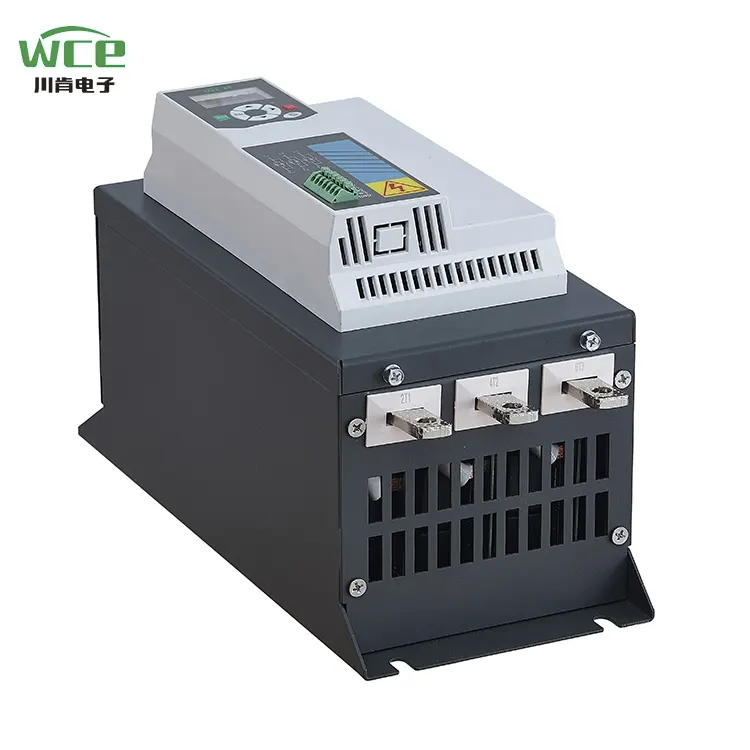
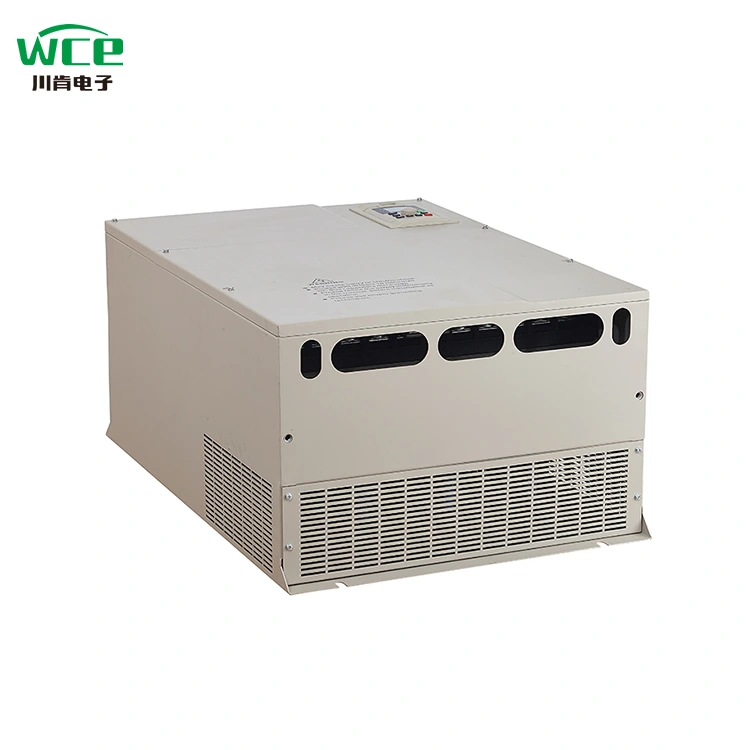
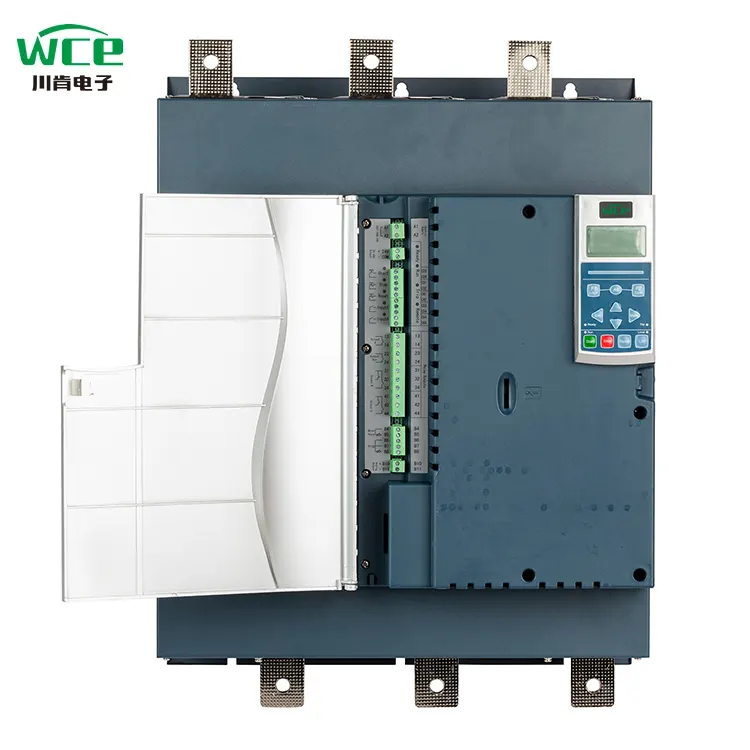
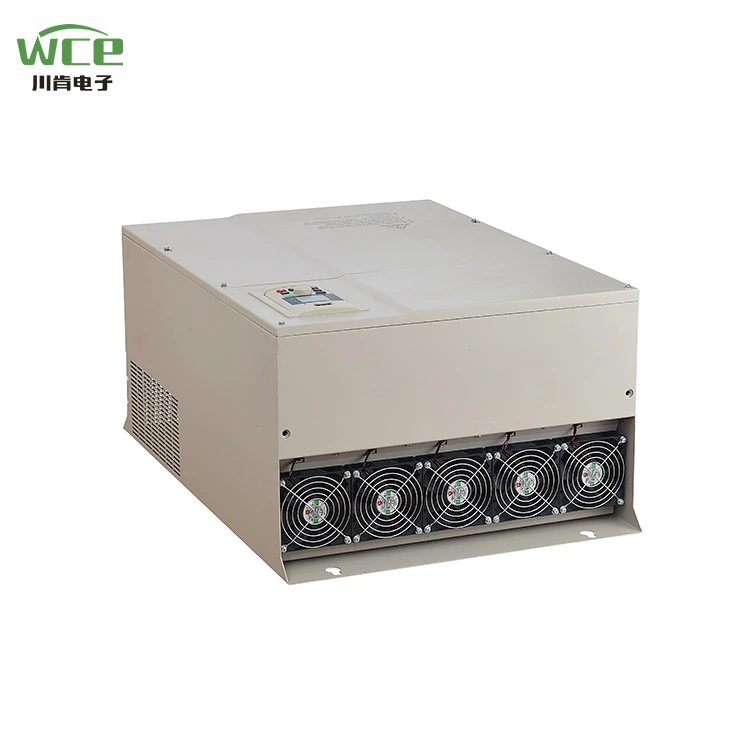
Zhejiang Chuanken Electric Co., Ltd. focuses on the research, development, and manufacturing of frequency converters and motor soft starters for industrial applications. Its WCE product range includes high-performance AC drives designed for different motor control requirements.

SCK300 Series High Performance AC Drive

The SCK300 series is designed for applications such as fans, pumps, conveyor belts, crushers, and other industrial equipment. Its published product information includes the following capabilities:

Feature Published SCK300 Specification
Input Voltage Options 220V / 380V / 660V configurations, ±15% as specified.
Input Frequency 47–63Hz.
Output Frequency 0–400Hz.
Control Modes No-PG vector control, V/F control, and torque control.
Overload Capacity 150% rated current for 60 seconds; 180% for 10 seconds.
Digital Inputs 8 programmable inputs.
Analog Inputs Two inputs, including 0–10V and configurable voltage/current input options.
Communication Modbus RTU; additional protocols through compatible expansion cards.
Protection Overcurrent, overvoltage, undervoltage, overheating, phase loss, overload, and other functions.

Flexible Control and Expansion Options

The SCK300 series supports different control and frequency-setting methods, including digital, analog, communication, multi-speed, and PID settings. These functions help integrate the drive into different industrial control arrangements.

Its published product information also describes an upgrade path from SCK300 to SCK350 through a control board upgrade, with expansion cards available for additional application requirements. Buyers should confirm the specific expansion options and compatibility for their intended configuration.

Solutions for Different Industrial Environments

From water supply and irrigation to mining, material handling, and automated production equipment, Zhejiang Chuanken Electric Co., Ltd. provides frequency converter options for a range of industrial motor control needs.

By discussing the motor nameplate, load characteristics, electrical supply, and control requirements with the supplier, buyers can identify a more suitable drive configuration for their projects.

Product selection tip: Do not assume that every SCK300 model has identical voltage ratings, power ranges, or optional functions. Request the technical datasheet for the exact model before confirming your purchase.

12. Frequently Asked Questions

Q1. What is a High Performance Three Phase VFD?

A High Performance Three Phase VFD is an electronic drive that controls the speed and torque of a three-phase AC motor by adjusting its output frequency and voltage. Advanced control functions can provide improved motor response and more flexible operation.

Q2. What is the main advantage of a three-phase VFD?

Its main advantage is adjustable motor speed. This allows equipment to operate according to actual process demand, potentially reducing energy consumption, mechanical stress, and unnecessary full-speed operation.

Q3. Can a three-phase VFD control different types of AC motors?

Some VFD models support both asynchronous motors and permanent magnet synchronous motors. However, motor compatibility depends on the drive's control capabilities, firmware, parameter settings, and the manufacturer's specifications.

Q4. What is the difference between V/F control and vector control?

V/F control regulates motor voltage in relation to output frequency and is suitable for many general-purpose applications. Vector control provides more advanced regulation of motor torque and speed, making it useful for demanding loads and improved low-speed performance.

Q5. How do I choose the correct VFD power rating?

Check the motor's rated power and current, load type, operating duty, starting torque, and environmental conditions. The drive's rated output current must be sufficient for the motor and application under the intended operating conditions.

Q6. Can a VFD reduce electricity consumption?

Yes, particularly in variable-torque applications such as centrifugal pumps and fans. By reducing motor speed when full output is unnecessary, a properly configured VFD can reduce energy consumption. Actual savings depend on system characteristics and operating conditions.

Q7. What applications are suitable for high-performance three-phase VFDs?

Typical applications include water pumps, fans, compressors, conveyors, crushers, mixers, cranes, and industrial production machinery. The required torque, speed range, and duty rating determine the appropriate model.

Q8. Does a three-phase VFD support 50Hz and 60Hz power supplies?

Many industrial VFDs support both 50Hz and 60Hz input supplies. For example, the published SCK300 specifications list an input frequency range of 47–63Hz. Always confirm the voltage and frequency ratings of the selected model.

Q9. What causes a VFD to trip during operation?

Common causes include overcurrent, overvoltage, undervoltage, overheating, excessive mechanical load, phase loss, and incorrect parameter settings. The displayed fault code and operating conditions should be checked before taking corrective action.

Q10. What communication protocols can a VFD support?

Depending on the model and available communication options, industrial VFDs may support Modbus RTU, Modbus TCP, PROFIBUS, or PROFINET. Some protocols require additional expansion cards.

Q11. What information should I provide when requesting a VFD quotation?

Provide the motor power, rated current, voltage, frequency, load type, required speed range, input supply, control mode, communication requirements, and expected operating environment. This information helps the supplier recommend a suitable configuration.

Q12. Why is cooling important for a high-performance VFD?

VFD power components generate heat during operation. Adequate ventilation, clean cooling passages, suitable installation clearance, and proper ambient temperature management help maintain reliable performance and reduce thermal stress.

Conclusion: Improving Industrial Motor Control with the Right Three Phase VFD

A High Performance Three Phase VFD is an important component in modern industrial automation. By adjusting motor speed and torque according to process requirements, it can improve equipment flexibility, support smoother operation, and help reduce unnecessary energy consumption in suitable applications.

However, achieving reliable performance requires careful attention to motor ratings, input voltage, output current, control mode, overload capacity, braking requirements, and installation conditions. Selecting a drive based only on rated power may overlook important electrical and mechanical requirements.

For industrial equipment manufacturers, system integrators, distributors, and factory operators, working with an experienced VFD supplier can make product selection and system integration more straightforward.

Looking for a High Performance Three Phase VFD?

Zhejiang Chuanken Electric Co., Ltd. provides frequency converter solutions for industrial motor control, automation equipment, pumps, fans, conveyors, crushers, and other demanding applications.

Whether you need a three-phase VFD for a new machine, an existing production line, or a customized industrial control project, our team can help you review the application requirements and explore a suitable product configuration.

Need technical specifications, product details, or a quotation? Contact us today to discuss your motor control requirements and discover suitable VFD solutions from Zhejiang Chuanken Electric Co., Ltd.

Contact Us
Related News
Leave me a message
X
We use cookies to offer you a better browsing experience, analyze site traffic and personalize content. By using this site, you agree to our use of cookies. Privacy Policy
RejectAccept